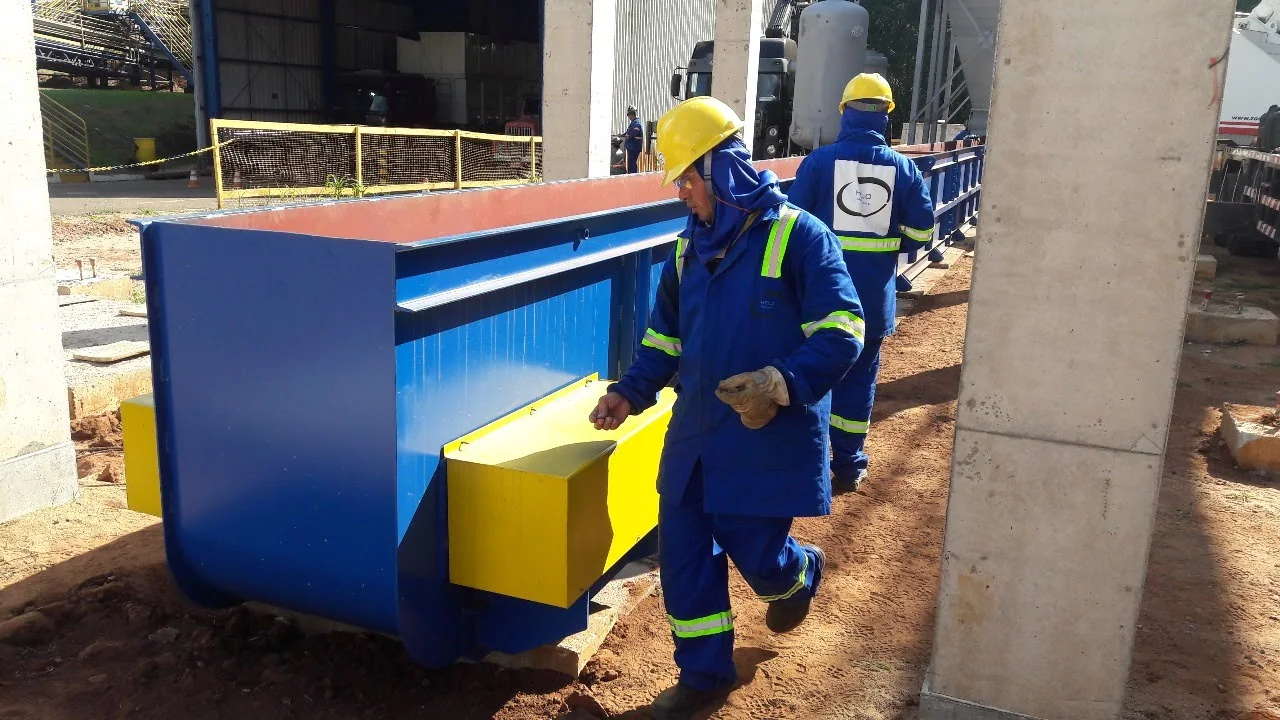
WET BOTTOM-ASH HANDLING

Submerged chain conveyor for quenching, dewatering, and discharging boiler bottom ash.

The Steammaster wet ash redler receives hot ash, slag, and clinkers from solid-fuel boilers into a water-filled trough. The chain conveyor cools, moves, and dewaters the material before discharge to a silo, bin, or truck.

ASH QUENCHING DEWATERING

A cleaner path for bottom ash than open hydraulic handling.

Hot ash drops through a transition chute into a water-filled conveyor trough. Water cools and quenches the material, while the chain and flight bars drag settled solids toward the inclined section, where free water drains before discharge.

  • Reduces open ash handling and helps contain hot material near the boiler outlet.
  • Uses the inclined section to dewater ash before silo, bin, or truck discharge.
  • Can reduce the need for ash ponds, dewatering silos, and extensive hydraulic ash circuits.

System operation

The transition chute creates an airtight interface between the boiler and the conveyor. Ash, slag, and clinkers fall into the water bath, where thermal shock can help break larger pieces before they settle on the conveyor bottom.

The chain conveys the settled ash to the inclined dewatering section. At the top of the incline, the discharge chute sends the material to storage, truck loading, or another ash-handling interface.

Where it belongs

Discuss the wet ash redler when a biomass, coal, wood, bagasse, or solid-fuel boiler needs controlled bottom-ash removal with cooling, dewatering, and easier final handling.

  • New solid-fuel boiler packages.
  • Retrofit of open or high-water ash handling systems.
  • Projects that need ash ready for disposal, sale, or intermediate storage.

Main components

Final configuration depends on boiler throat, ash load, water circuit, discharge point, access, and maintenance strategy.

Drive and chain

Hydraulic or electric drive, fixed or variable speed, with chain and flight bars selected for ash impact and abrasion.

Trough and liners

Reinforced trough construction can use replaceable abrasion-resistant liners in wear areas.

Tensioning and access

Manual or automatic tensioning and removable panels support inspection, chain replacement, and field maintenance.

Water level and sprays

Overflow control and optional spray nozzles help maintain water level and clean the chain before the drive sprockets.

Benefits for the boilerhouse

  • Lower water consumption than traditional hydraulic ash routes.
  • Lower energy demand by moving ash mechanically after quenching.
  • Automatic dewatering creates material that is easier to handle.
  • Fewer ash-handling components can simplify maintenance and layout.

Next recommended step

Share boiler capacity, fuel, ash rate, bottom-ash temperature, boiler throat geometry, available height, discharge point, water circuit limits, and maintenance access so engineering can define the conveyor arrangement.