EXHAUST STACK SYSTEM

CH-AUTO-P self-supporting industrial stacks for safe discharge, structural confidence, and field access in boilerhouse projects.

Steammaster develops self-supporting stacks as real industrial equipment: engineered for hot-gas discharge, structural safety, sample-collection access, and long-term lifecycle service around the boiler island.

TURNKEY DELIVERY FIELD ACCESS

Why the stack belongs in the boiler conversation early

The catalog is clear: a self-supporting stack is a high-responsibility industrial system because it influences plant operation, technician safety, gas discharge behavior, and long-term structural performance under wind and temperature.

  • Height and diameter must be selected together with the real flue-gas route.
  • Platforms and ladders are part of safe inspection and sampling access, not decorative extras.
  • Foundation and anchors must be considered as part of the same engineered scope.

Industrial equipment, not a generic exhaust tube

The first three catalog pages position the self-supporting stack as a real engineered asset. That means durability, operating safety, and efficiency must be treated with the same seriousness as the boiler itself.

  • The correct dimensions help keep gas velocity and outlet behavior inside the pressure-drop allowance.
  • Carbon steel and stainless steel can be combined according to corrosion and condensation risk.
  • Dynamic-behavior calculations can be included when the project demands more structural confidence.

Turnkey scope with real field responsibility

The catalog also reinforces that a self-supporting stack is not just the shell. The project should already include anchors, access structures, installation logic, and the civil interface for the foundation.

  • Self-supporting means the shaft carries the structural effort without external support towers.
  • Platforms and ladders can be preassembled for more predictable field fit-up.
  • Foundation design must absorb the same acting loads that reach the metal structure.

MATERIAL AND ACCESS LOGIC

The stack specification should reconcile flue-gas behavior, corrosion exposure, and technician access from the beginning.

That is why the catalog talks not only about discharge, but also about excess combustion air, materials, pressure-drop behavior, condensation prevention, and how the maintenance team will physically reach the relevant points.

Dynamic behavior and Scruton-type mitigation when applicable

The third catalog page highlights that, when the project needs it, the stack can include helical-strake logic at the top to disturb airflow and reduce vortex-shedding effects that would otherwise induce transverse vibration.

  • Use it when aerodynamic stability becomes part of the risk review.
  • It belongs to the structural strategy, not to last-minute improvisation.

References, logistics, and modular field reality

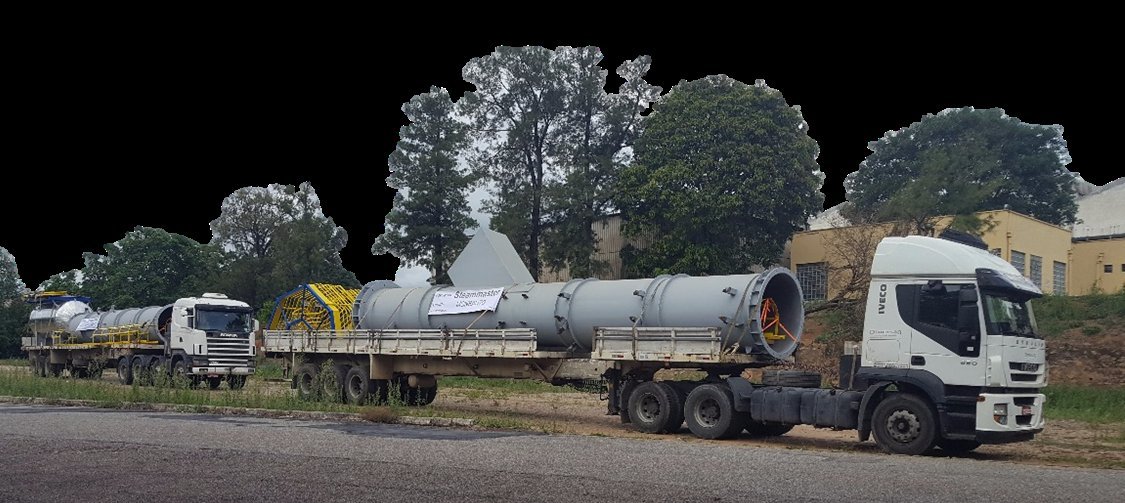
The catalog also uses real references and transport reality to show that the stack can be delivered as industrial scope with practical staging, modular shipment, and controlled erection planning.

That matters commercially because delivery logic affects crane planning, installation window, and how quickly the boiler island can reach operating readiness.

When to bring the stack into the project decision

Bring the self-supporting stack into the project discussion when the exhaust route affects pressure-drop balance, environmental release height, sampling access, or the structural and civil package around the boiler.

Next recommended step

Share the flue-gas source, expected temperature, duty, pressure-drop limit, required discharge height, and any access or sampling requirement so engineering can frame the right stack route early.